Tires Built for Load Demands
Trailer Tires in Inman for hauling equipment, cargo, and recreational vehicles safely
Trailer tires handle weight distribution and road stress differently than passenger vehicle tires, with construction designed specifically for load-bearing rather than steering or traction. Skinner Tire provides trailer tire service in Inman, addressing the wear patterns and pressure requirements unique to trailers used for work equipment, enclosed cargo, and recreational hauling. You need tires rated for your trailer's axle weight and usage frequency, not generic replacements that fail under sustained loads.
Trailer tires use stiffer sidewalls to resist sway and maintain stability when towing, and they require higher inflation pressures than standard automotive tires to support vertical loads without excessive flexing. Upstate South Carolina's mix of highway miles and local hauling routes means trailers often sit idle between heavy-use periods, which causes dry rot and sidewall cracking even when tread depth remains adequate. The service involves matching tire construction to your trailer's gross vehicle weight rating and inspecting for age-related deterioration that becomes a blowout risk at highway speeds.
Schedule a tire evaluation to verify your current trailer tires meet load ratings and show no signs of weather checking or uneven wear.
What Proper Trailer Tire Replacement Requires
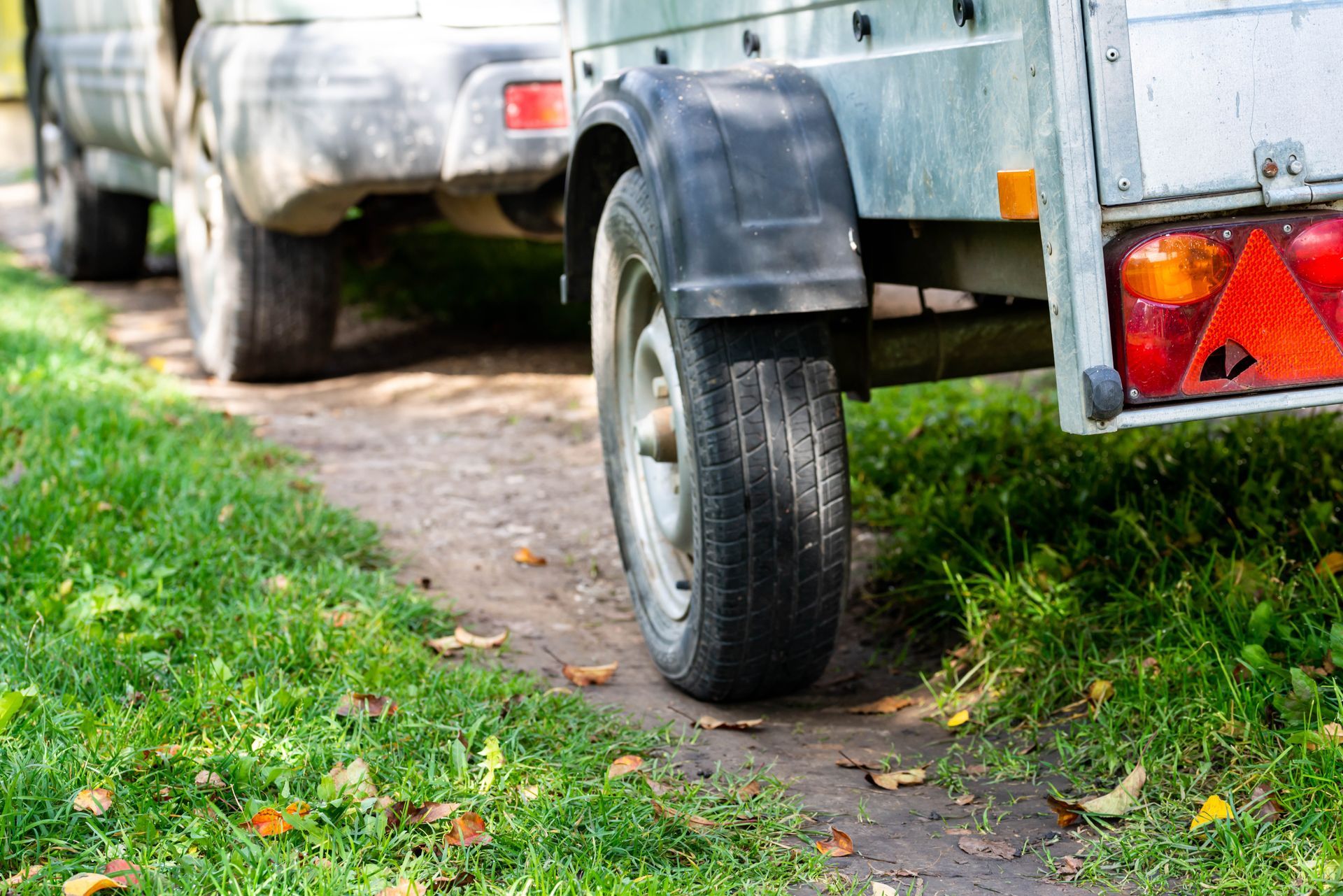
Trailer tire selection depends on whether your trailer uses special trailer-rated tires with ST designation or light truck tires, and whether the application involves single-axle or tandem-axle configurations that distribute weight differently. Speed ratings, ply construction, and maximum load stamps all determine whether a tire can handle sustained towing without tread separation or belt failure. The wrong tire choice leads to premature wear on the inside edges if the tire flexes too much under weight, or center wear if overinflated to compensate for inadequate load capacity.
After installation, you'll notice stable tracking without the wandering or bouncing that occurs when trailer tires are underinflated or mismatched in size across an axle. Properly rated and mounted trailer tires maintain consistent contact with the road surface, reducing frame stress and preventing the fishtailing that happens when one tire loses pressure or grip during highway towing. Skinner Tire mounts trailer tires with attention to valve stem positioning and hub compatibility, which prevents slow leaks from stem damage during tire flexing.
Trailer tires also require periodic rotation on tandem-axle setups to equalize wear between the front and rear positions, since the rear axle typically carries more weight and experiences faster tread wear. Tires stored outdoors between uses need inspection for ozone cracking along the sidewalls, which weakens the rubber structure even when the trailer hasn't logged significant miles. Age limits matter more than tread depth for trailer tires, with replacement recommended every five to seven years regardless of visual wear.
Questions Before Replacing Trailer Tires
Trailer use patterns in Inman range from weekly hauling to seasonal recreational towing, and each pattern affects tire longevity and failure risk differently.
What's the difference between ST and LT tires for trailers?
ST tires are designed specifically for trailer use with reinforced sidewalls that resist sway, while LT light truck tires prioritize traction and steering response, making them less stable under towing loads that cause lateral forces.
How does sitting idle affect trailer tires?
Extended parking exposes trailer tires to constant weight on one section of the tread and allows UV exposure to break down rubber compounds, causing flat spots and sidewall cracking that won't appear on tires in regular rotation.
When should trailer tires be replaced regardless of tread?
Trailer tires older than six years should be replaced even if tread depth appears adequate, since age-related rubber degradation reduces strength and increases blowout risk at highway speeds.
Why do trailer tires wear unevenly?
Uneven wear typically results from incorrect inflation pressure for the load carried, mismatched tire sizes on the same axle, or suspension issues that prevent even weight distribution across the tread surface.
What load rating do I need for my trailer?
Load rating must meet or exceed your trailer's gross vehicle weight rating divided by the number of tires, with additional margin for uneven load distribution and dynamic forces during towing and braking.
Skinner Tire matches trailer tires to your specific hauling requirements and inspects mounting hardware to prevent road failures. Request a load rating consultation based on your trailer's weight specifications and typical cargo.